01Origin
Engineered from inside a working BSF plant
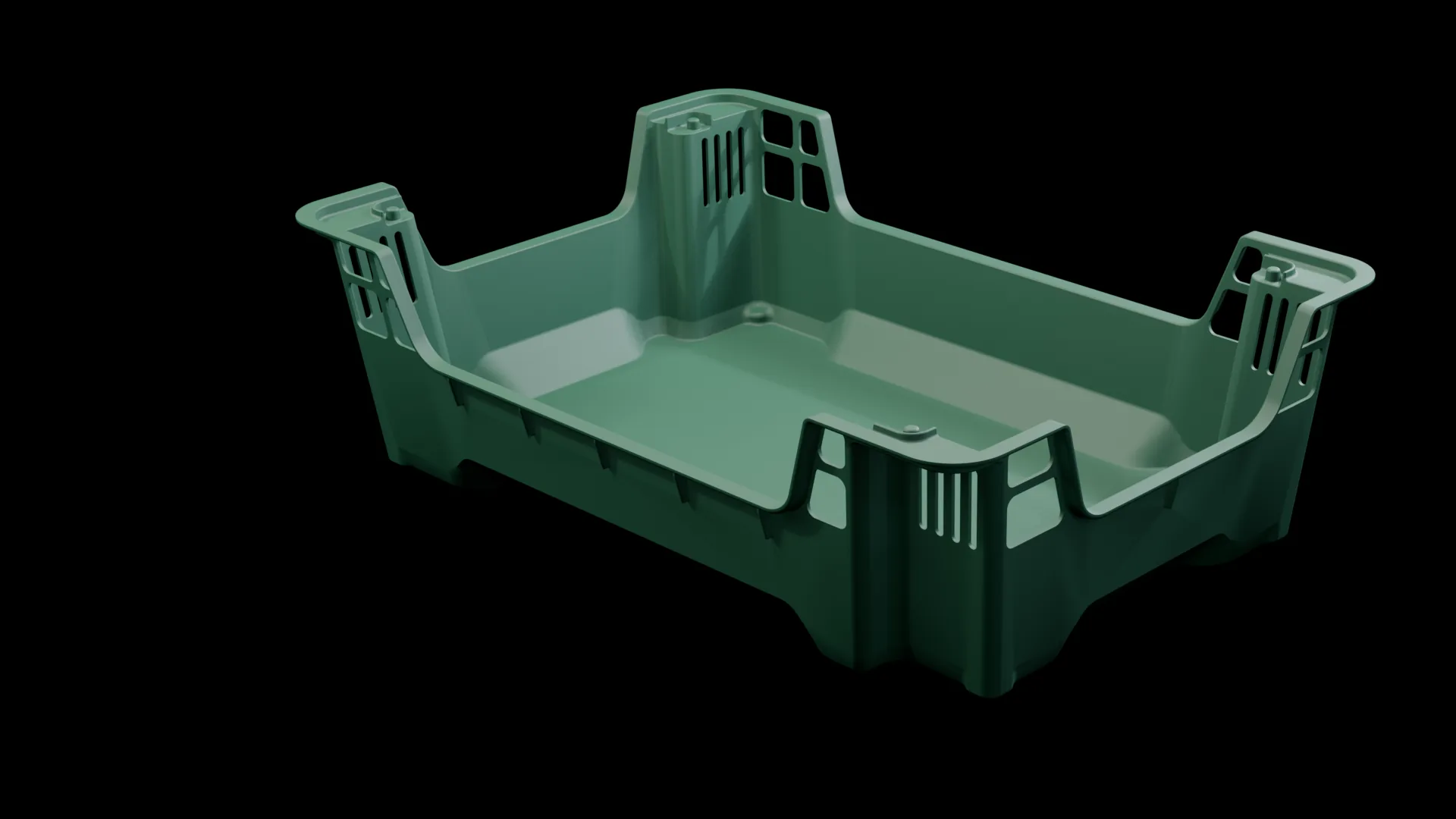
We designed it in our own plant, between shifts of filling, stacking and washing. Every dimension answers a task we do every day.
engineered for insect farming
LarvTech · Industrial insect rearing tray
01Origin
We designed it in our own plant, between shifts of filling, stacking and washing. Every dimension answers a task we do every day.
02Cycle
Every 7 days the same tray is filled, seeded, grown, moved, harvested and washed. That is 416 handling operations per tray per year; every second it saves is repeated in all of them.
03BSF
Smooth walls and a continuous floor so the substrate spreads evenly and comes out in one piece at harvest. More usable height than the standard 145 mm tray: more substrate and more larvae every cycle, on the same footprint.
04Stacking
When full, each tray leaves the one above the air the larvae need. Five stacks per US pallet.
05Stability
Four seating points in the corners lock each tray onto the one below. The stack moves on the pallet truck as a single block.
06Cleaning
Wide inner radii and surfaces the water can reach. A few seconds saved per tray add up to hours every month.
07Nesting
Empty, it turns half a turn and drops into the tray below. The same 17-tray stack takes far less space in the truck, in storage and in the wash area.
08Automation
The openings in the short ends are designed for a gripper to reach in and lift the tray. It works with different grippers and lines: robotic stacking and destacking, conveying and automatic washing.
09Growth
The same tray works in manual, semi-automated and robotic facilities. The trays you buy today still work the day you automate.
10 · Detail
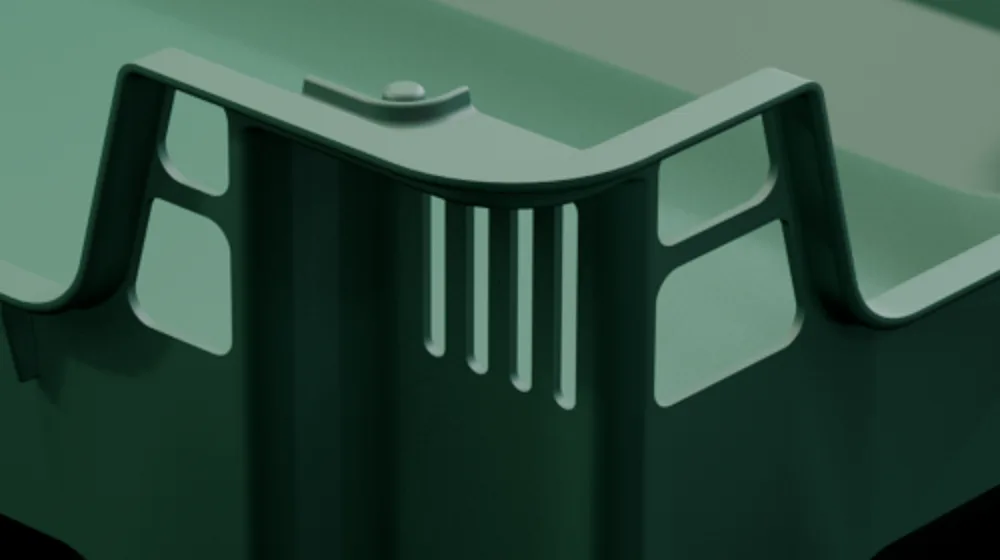
They centre the upper tray and keep the stack from shifting when it moves.
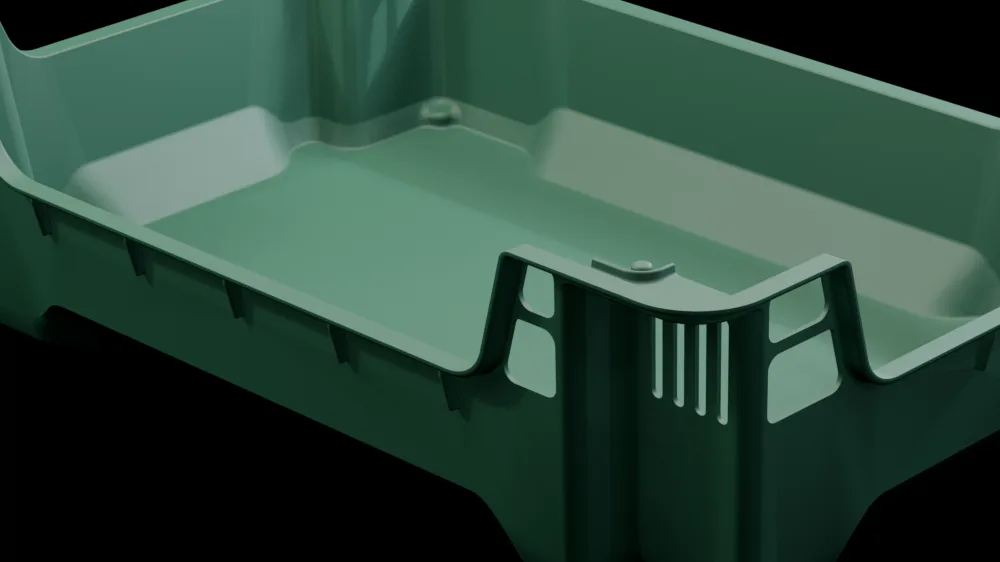
Rounded internal corners where residue has nowhere to stay.
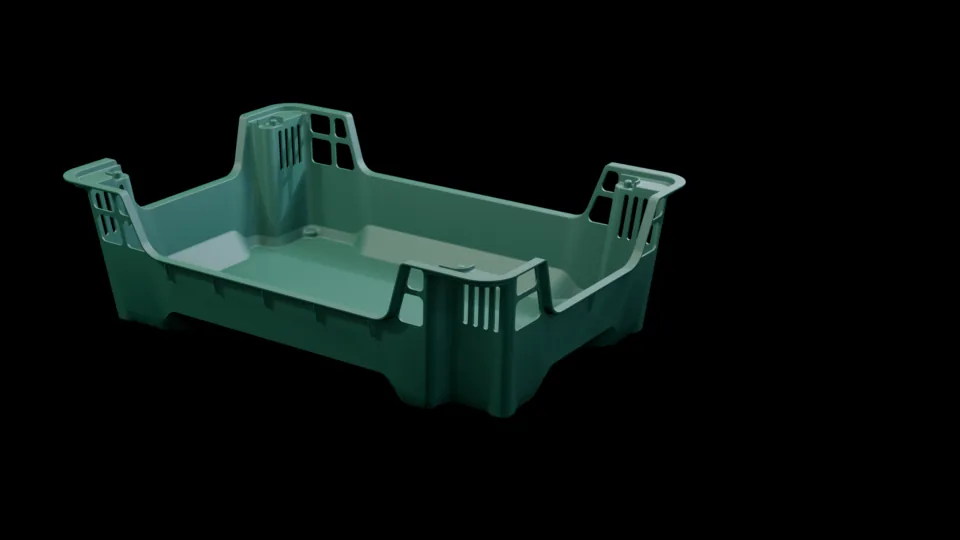
The same part stacks one way and nests the other.
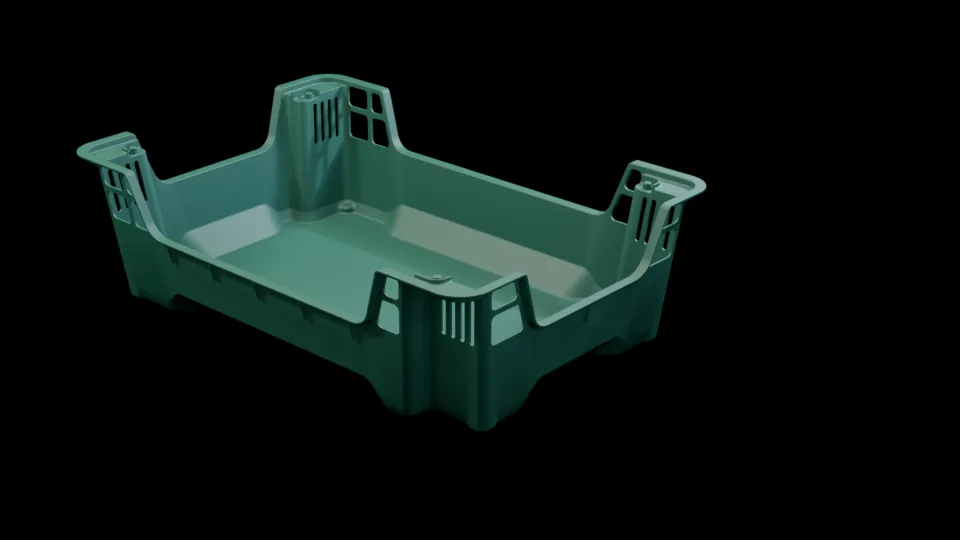
Rigid short ends for the operator's hand and for the robot gripper.
11 · Specifications
* Calculated from the CAD model. To be validated with the first parts from the production mould.
Download data sheet (PDF)12 · Comparison
| LarvBox | Standard tray 600 × 400 × 145 | |
|---|---|---|
| External dimensions | 600 × 400 × 170 mm | 600 × 400 × 145 mm |
| Usable volume per tray | 17.2 L | 15.35 L |
| Larvae per tray per cycle | ≈ +12 % at the same seeding density | Baseline |
| Extra volume per pallet of 85 | +157 L | — |
| Extra volume across 10,000 trays | +18,500 L | — |
| Weight | ≈ 1.0 kg (prototype) | 1.18 kg |
| Nestable when empty | Yes, turned 180° | No |
| 17 empty trays | ≈ 0.59 m high, nested | Over 2 m, stack only |
| Seating points in the corners | Yes, a steadier stack | No |
| Designed inside a BSF plant | Yes | No |
Reference: Beekenkamp 6205, data published by the manufacturer at beekenkamp-insect.nl (accessed 30/09/2026). The larvae increase per tray is proportional to usable volume at the same seeding density.
13 · 360°
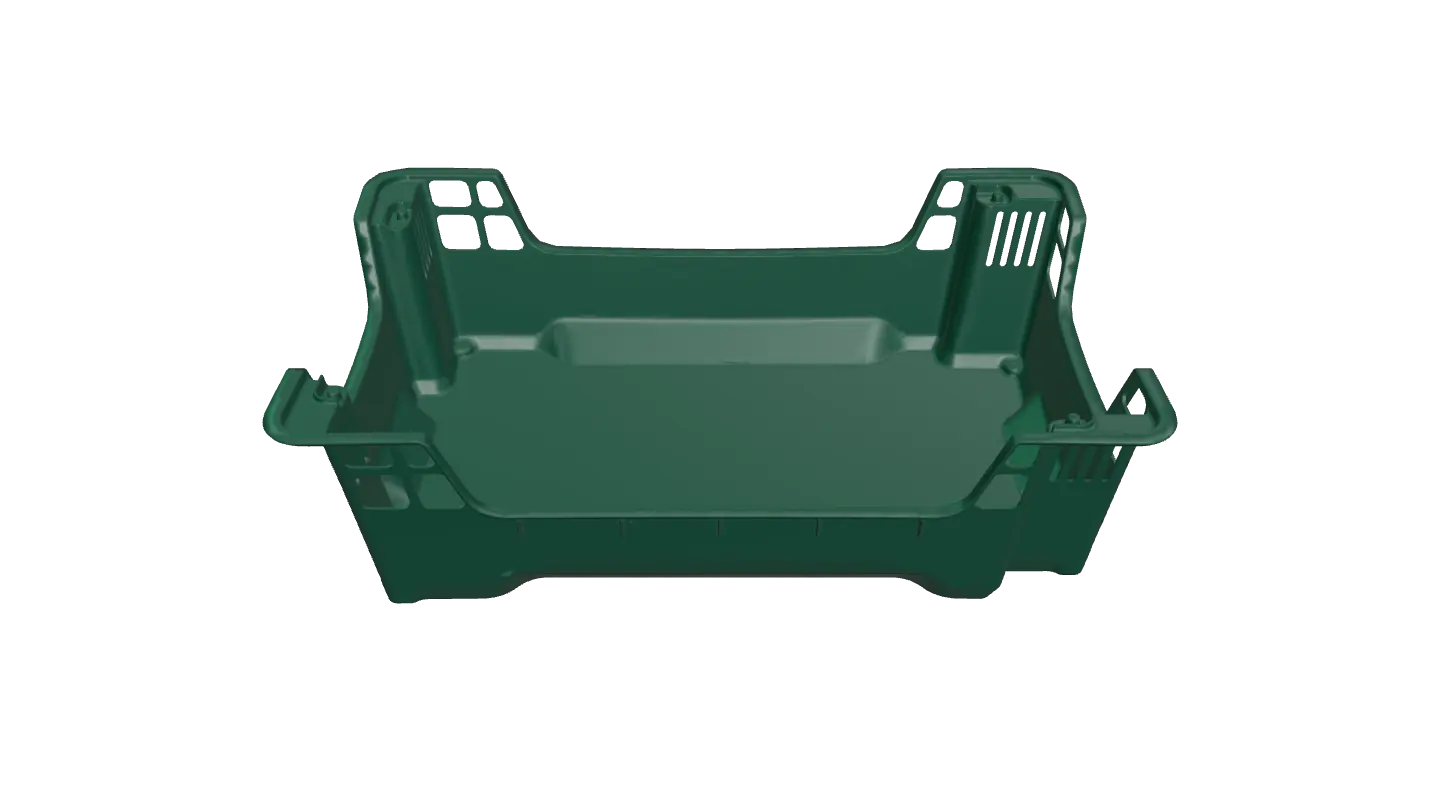
Drag to turn it
14 · Sample
You understand how solid LarvBox is the moment you pick it up. We send you a free sample; you only cover shipping.
We currently have no trays available for samples. Leave your details and we will write as soon as stock arrives.